PCO Air Purifier: Find the Best Option for Your Needs
PCO air purifiers use photocatalytic oxidation to treat certain VOCs and gaseous pollutants through a light-activated catalyst. Compare models by airflow, catalyst design, and independently verified performance.
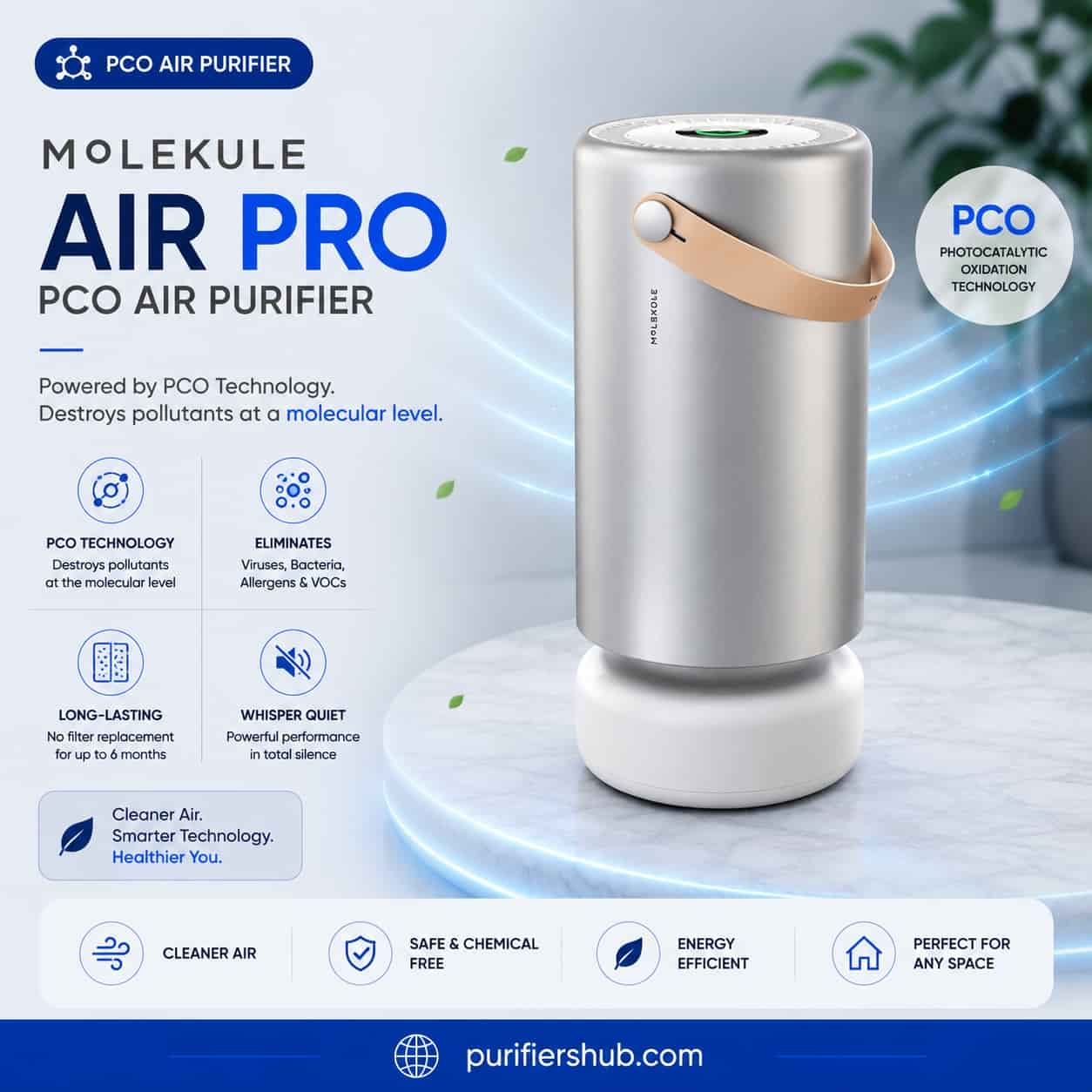
Molekule Air Pro
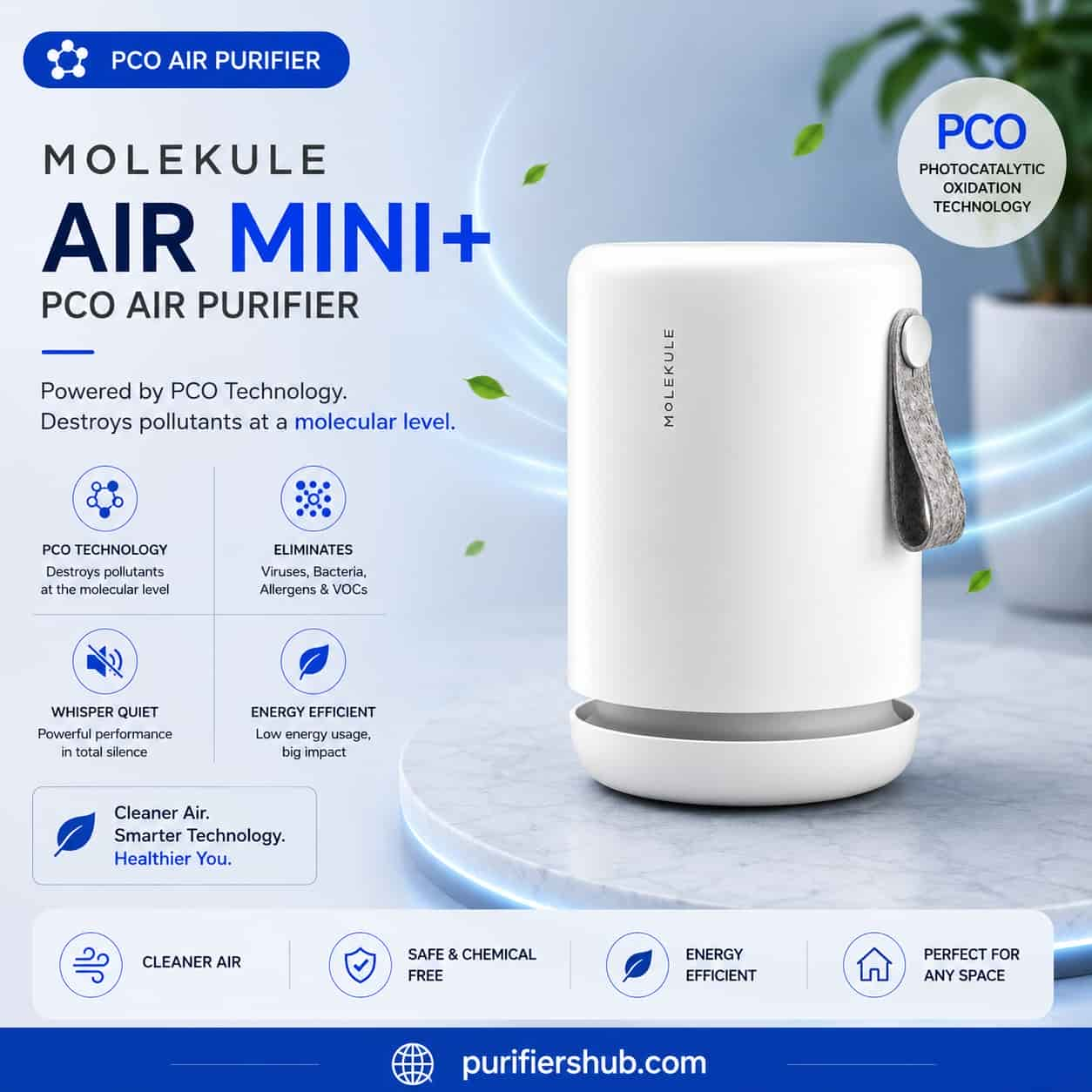
Molekule Air Mini+
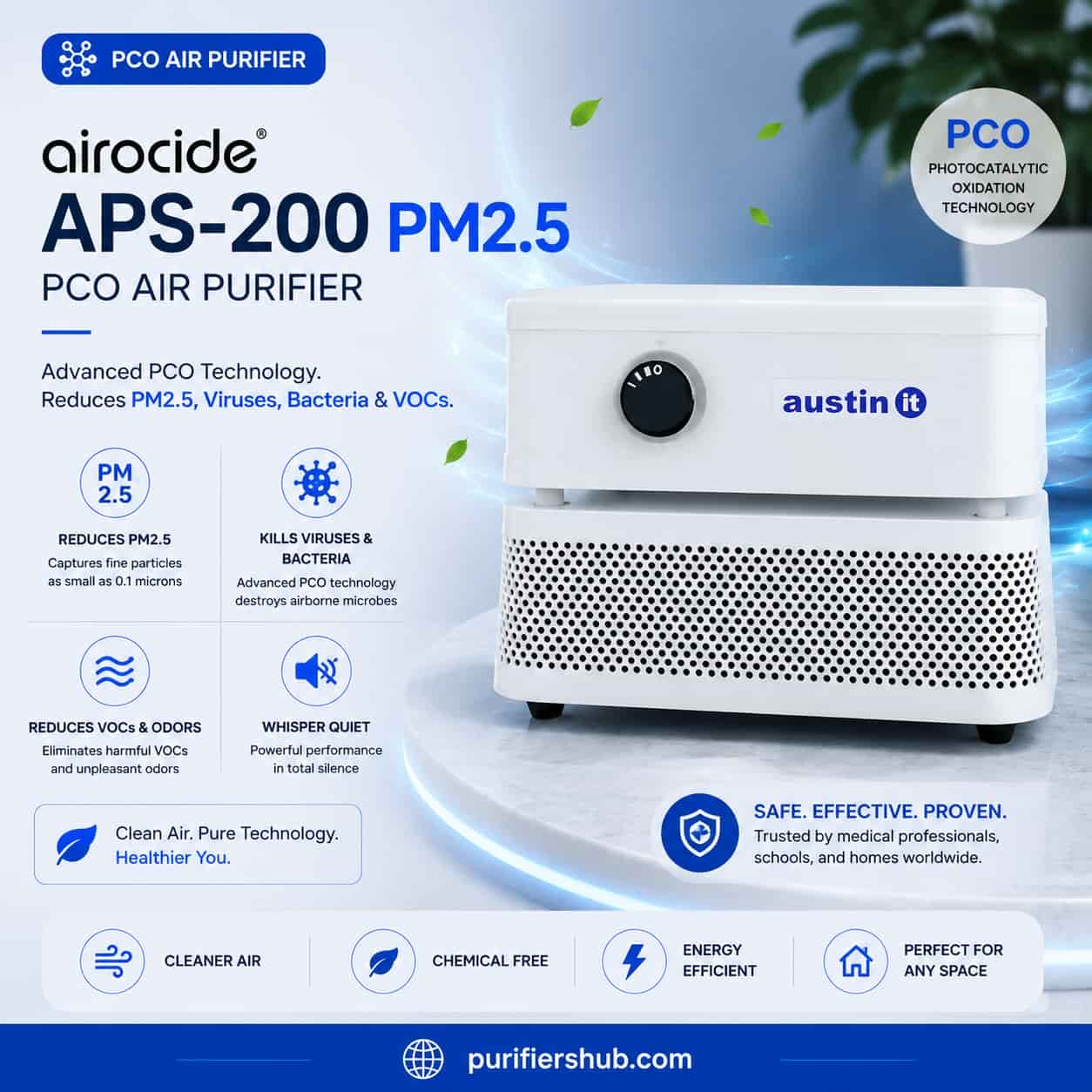
Airocide APS-200 PM2.5
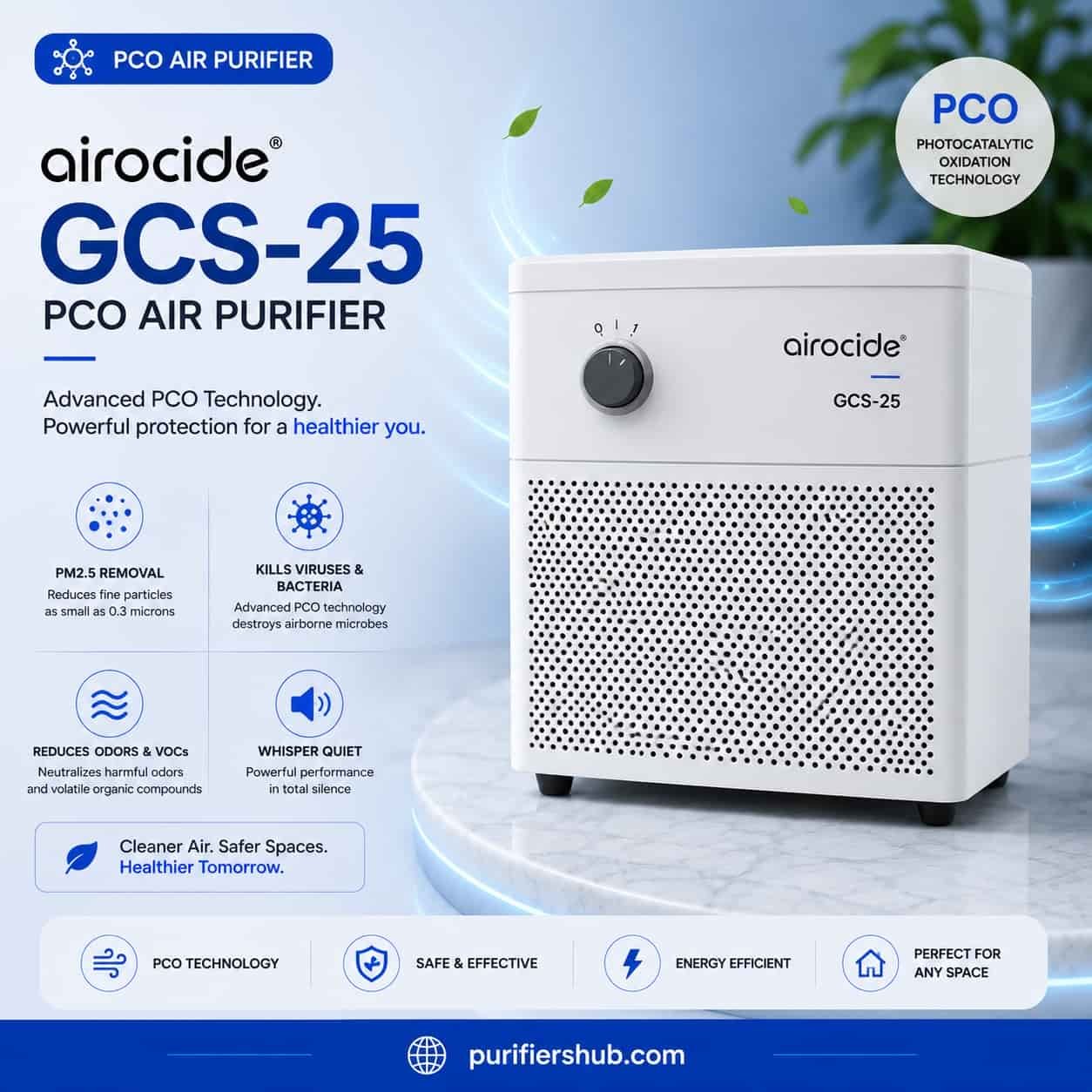
Airocide GCS-25
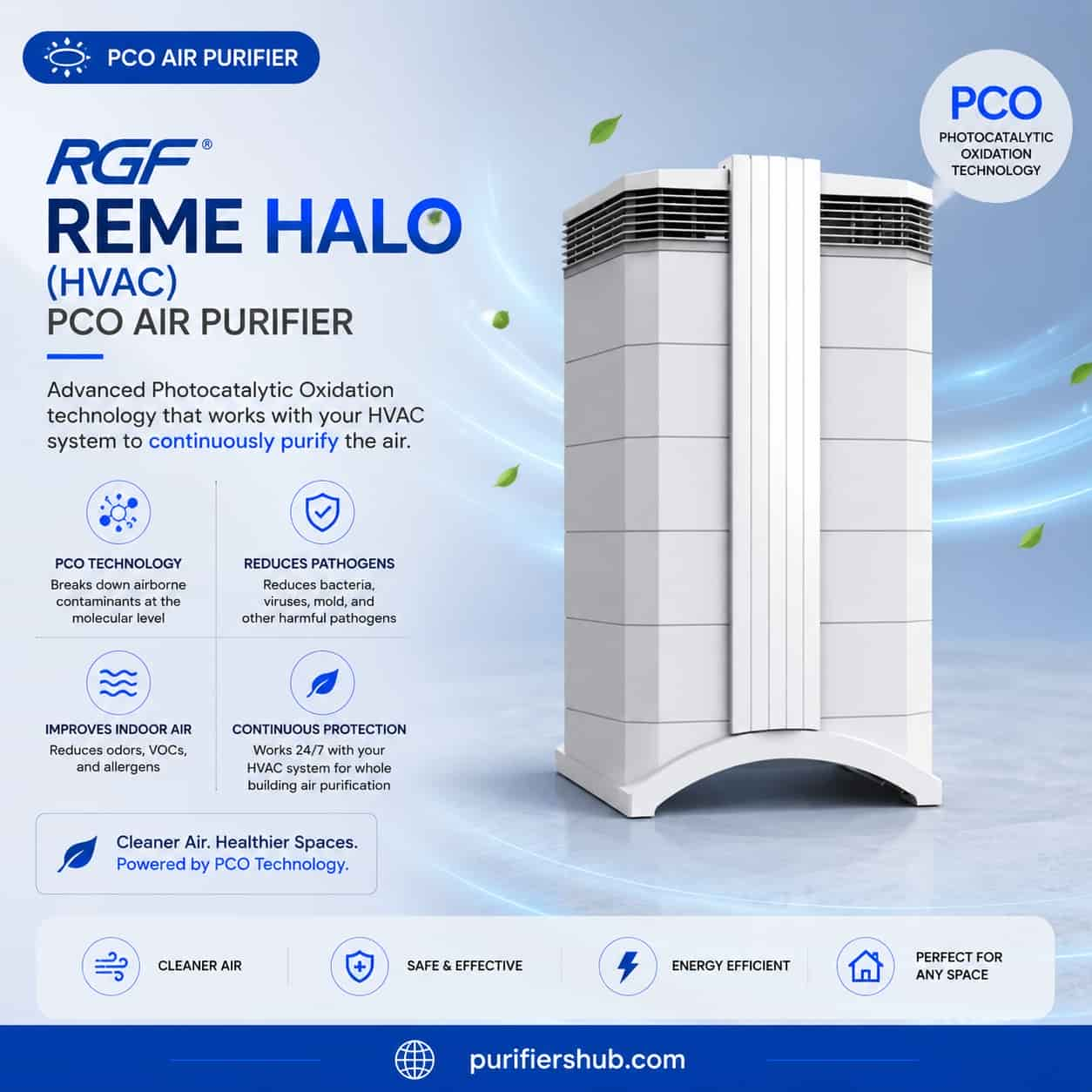
RGF REME HALO (HVAC)
About PCO Air Purifier: Find the Best Option for Your Needs
A PCO air purifier uses photocatalytic oxidation to treat certain gaseous pollutants, particularly volatile organic compounds (VOCs), through a photocatalyst and light-based reaction. Titanium dioxide (TiO₂) is one of the most widely studied photocatalysts in PCO systems. However, real-world performance can vary with factors such as airflow, humidity, pollutant concentration, catalyst design, and UV intensity. Research has also identified the potential for unwanted reaction by-products, making system design an important consideration. In this guide, we compare PCO air purifiers, explain how photocatalytic oxidation works, and highlight the key features and limitations to consider before choosing one.
Frequently Asked Questions
What is a PCO air purifier and how does photocatalytic oxidation work?
A PCO air purifier uses photocatalytic oxidation (PCO) to treat certain gaseous pollutants, particularly volatile organic compounds (VOCs). The process typically combines a photocatalyst, such as titanium dioxide (TiO₂), with UV light. When activated, the catalyst promotes chemical reactions at its surface that can break down certain pollutants. Actual performance depends on the catalyst, light intensity, airflow, humidity, pollutant concentration, and reactor design, so laboratory results may not directly represent performance in a typical home.
What role does airflow play in photocatalytic air cleaning?
Airflow affects how much polluted air passes through the photocatalytic reaction zone and how long pollutants remain in contact with the catalyst. Factors such as airflow rate, reactor design, humidity, pollutant concentration, and UV intensity can influence treatment performance. This means two systems using similar photocatalytic technology may produce different results under different operating conditions. When comparing models, look for clear information about airflow, testing conditions, and the pollutants used during performance testing rather than relying only on the technology name.
What pollutants can photocatalytic oxidation target?
Photocatalytic oxidation is primarily researched for gaseous pollutants, especially VOCs found in indoor environments. Research has examined compounds such as toluene, xylene, acetone, alcohols, and other organic contaminants. The range of pollutants that can be treated depends on the specific catalyst, reactor design, light source, and operating conditions. PCO should be evaluated according to the pollutants a particular system has been tested against rather than assuming that the technology treats every indoor contaminant equally.
Does PCO replace HEPA filtration or activated carbon?
PCO and conventional filtration address different types of pollutants. HEPA filtration is designed primarily to capture airborne particles, while activated carbon and other adsorbent materials can help remove certain gases and odors. PCO is generally investigated for the treatment of gaseous pollutants through chemical reactions. A system combining multiple technologies may address a broader range of contaminants than relying on PCO alone, depending on its design and independently verified performance.
Can PCO technology produce by-products or ozone?
By-product formation is an important consideration because photocatalytic reactions do not always completely mineralize the original pollutant. Research has identified compounds such as formaldehyde and acetaldehyde among possible reaction by-products under certain experimental conditions. EPA technical guidance also notes that some PCO systems using UV-C can generate ozone if the lamp is not designed to inhibit ozone production. For this reason, buyers should examine the device's ozone emissions, by-product testing, catalyst design, and any downstream filtration before relying on a PCO system for indoor air treatment.