UV Air Purifier: Compare the Best Options for Your Home
UV air purifiers use ultraviolet light alongside mechanical filters to provide an additional air-treatment step. Compare models by filtration type, room coverage, airflow, and maintenance requirements.
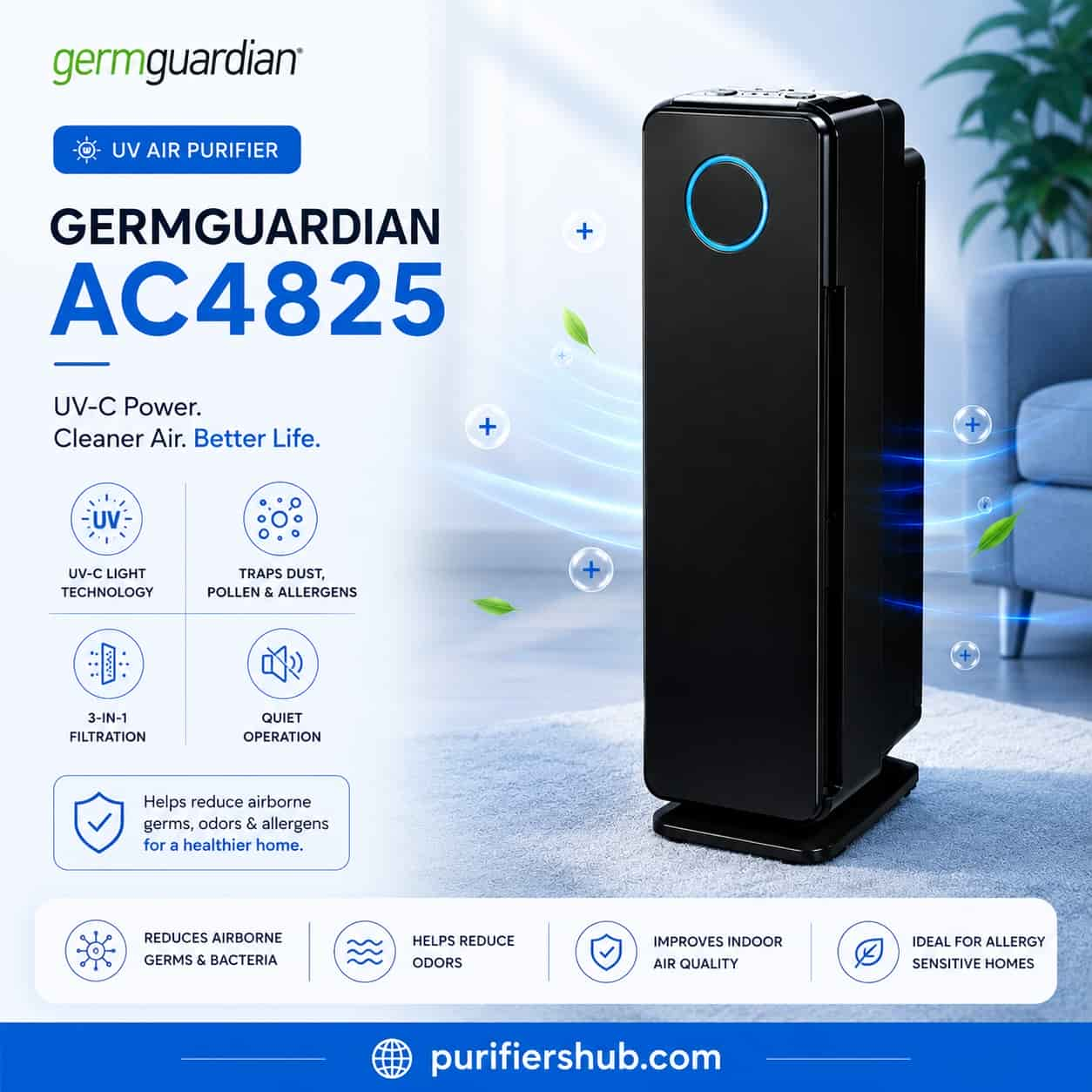
GermGuardian AC4825
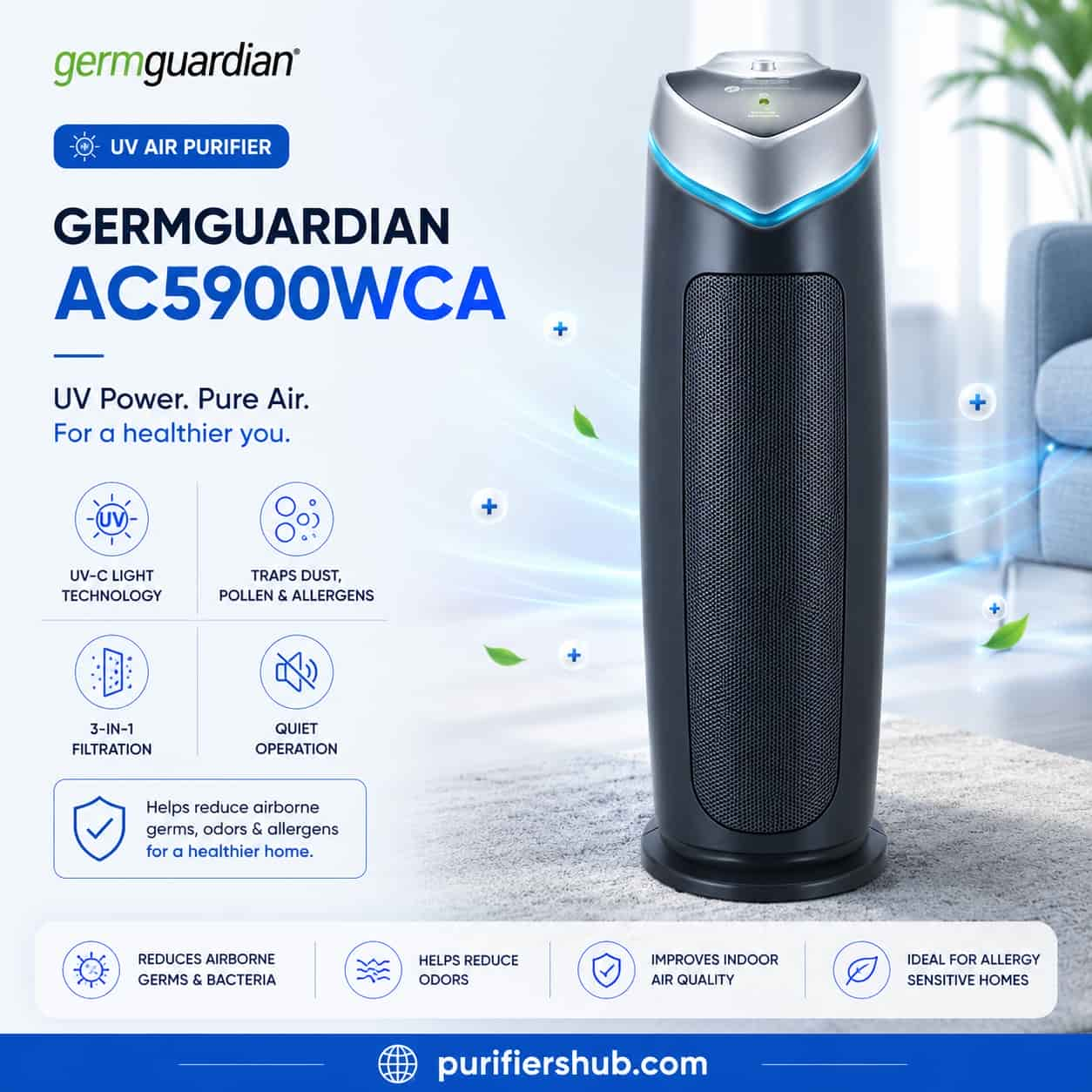
GermGuardian AC5900WCA
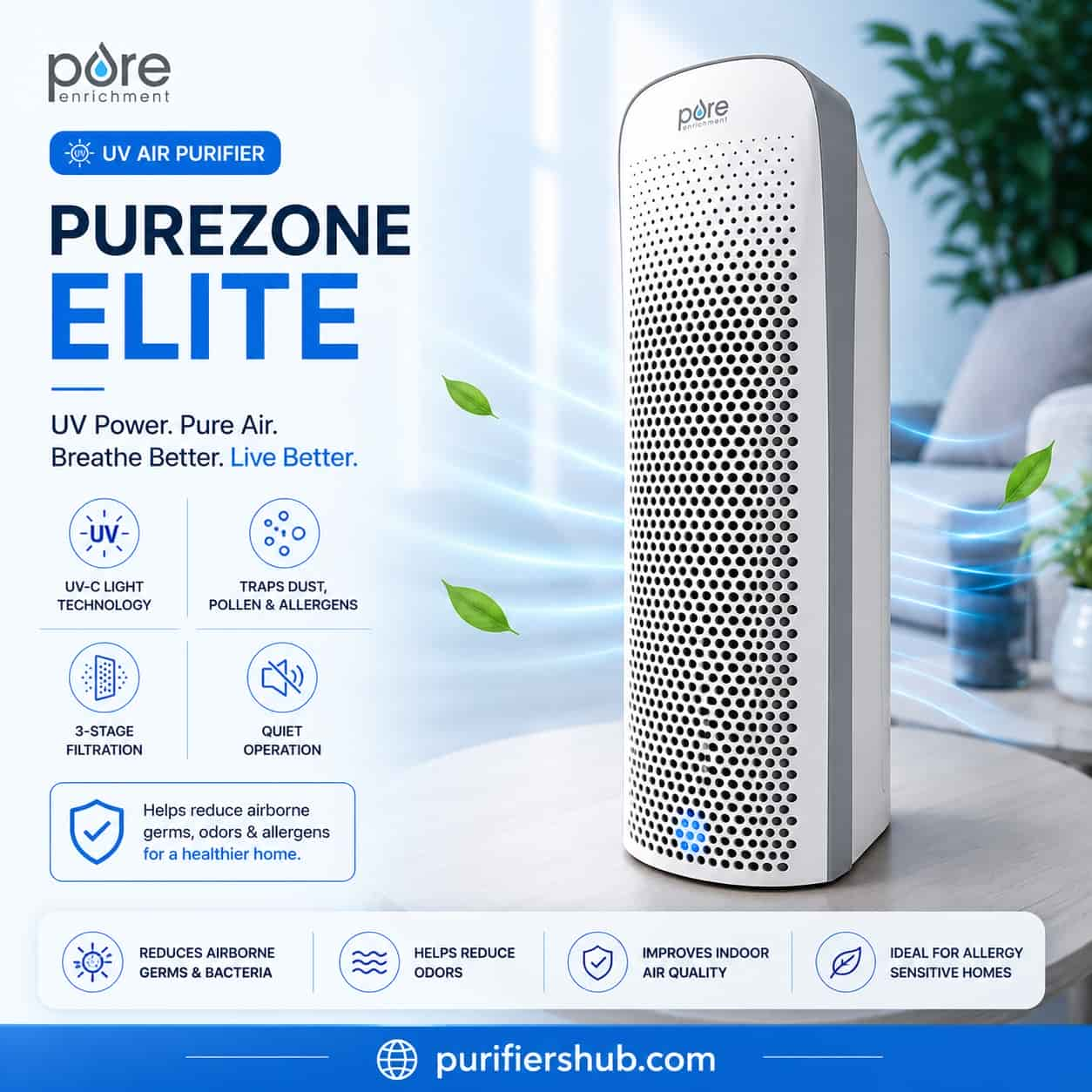
Pure Enrichment PureZone Elite
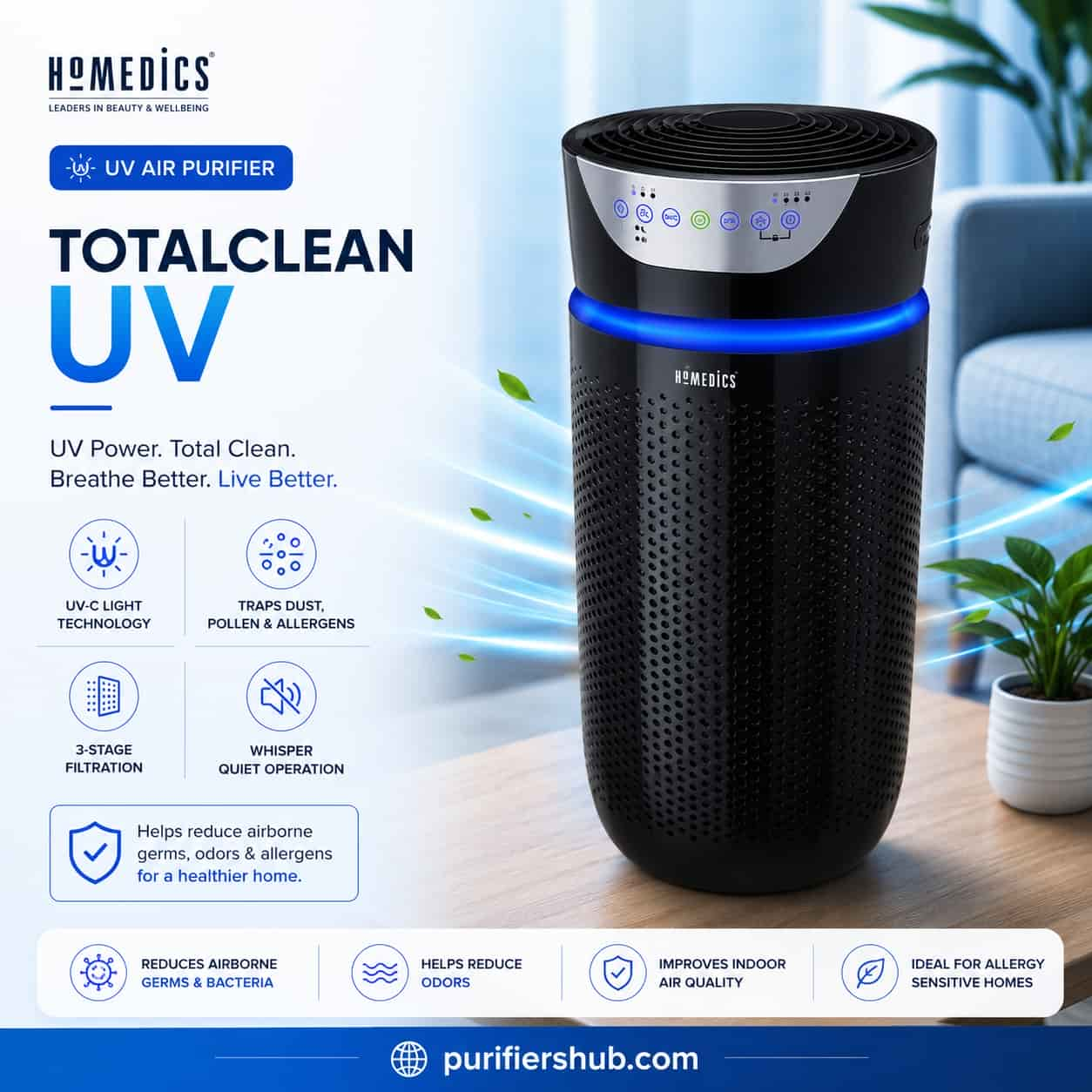
HoMedics TotalClean UV
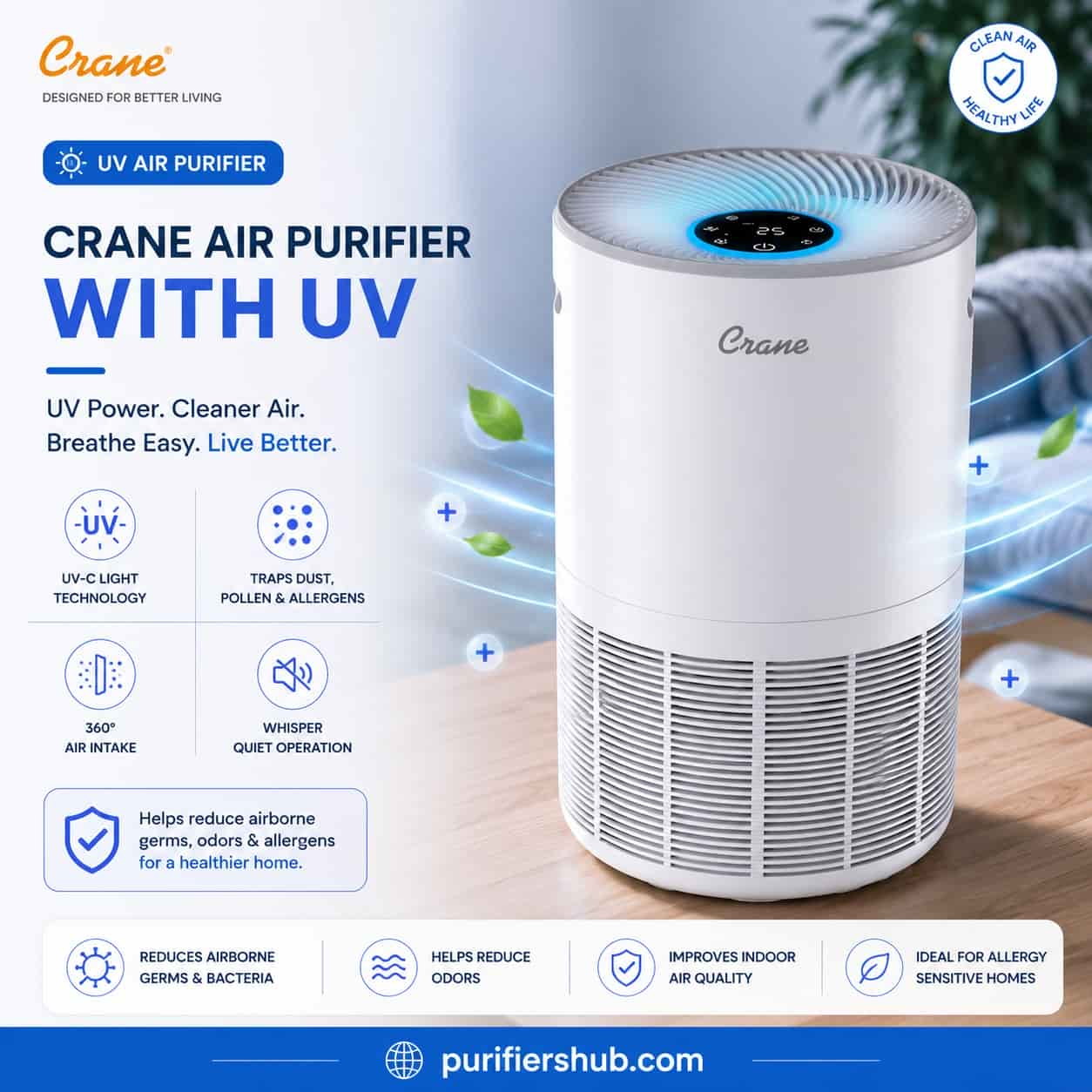
Crane Air Purifier with UV
About UV Air Purifier: Compare the Best Options for Your Home
A UV air purifier uses ultraviolet light as part of an air-cleaning system, often alongside filters designed to capture airborne particles. UV technology is intended to provide an additional air-treatment step, while the overall performance depends on the device's design, airflow, filtration, and UV exposure. When comparing options for your home, consider factors such as filter type, room coverage, airflow, maintenance, and whether the UV system operates safely within the intended environment. This guide compares different models and technologies to help you understand their features and choose an option that fits your indoor air-cleaning needs.
Frequently Asked Questions
What is a UV air purifier and how does it work?
A UV air purifier uses ultraviolet light as one part of an air-cleaning system. Depending on the design, air may pass through filters before or after exposure to UV energy. Germicidal ultraviolet (GUV) systems can inactivate certain airborne microorganisms when the appropriate UV dose, airflow, exposure time, and system design are provided. For residential products, performance can vary considerably, so UV technology is best evaluated alongside the unit's filtration system, airflow, coverage, and published specifications.
What should you consider when choosing a UV air purifier for your home?
Look at the complete air-cleaning system rather than focusing on the UV feature alone. Important factors include the type of particle filter, airflow or CADR where available, recommended room size, maintenance requirements, noise level, energy use, and the manufacturer's information about UV operation and safety. A model that combines UV treatment with effective particle filtration may offer a more comprehensive approach than relying on UV technology alone.
Does UV-C technology remove dust, pollen, and other airborne particles?
UV-C and other germicidal UV technologies are designed to act on microorganisms rather than physically capture particles. Dust, pollen, smoke particles, and similar pollutants are generally addressed through mechanical filtration. When particle removal is a priority, check the product's filter type, airflow, and independently supported performance information rather than assuming that the UV component provides particle filtration.
Are UV air cleaners safe to use in occupied rooms?
Safety depends on the design and installation of the UV system. Properly designed GUV systems control UV exposure so that people in occupied areas are not exposed to harmful levels of ultraviolet energy. Poorly designed or incorrectly installed systems can create exposure concerns, which is why product instructions, shielding, installation requirements, and maintenance procedures deserve careful attention. For specialized GUV installations, CDC recommends working with qualified professionals or experienced system designers.
Can UV air cleaners replace HEPA filtration or ventilation?
UV treatment is generally considered a supplemental air-cleaning approach rather than a replacement for effective ventilation or particle filtration. CDC and EPA guidance describes GUV as an additional layer that can work alongside ventilation and filtration. For residential air cleaning, the overall system should be evaluated according to the pollutants being addressed, the room conditions, filtration capability, airflow, and the specific technology used.