Carbon Filter Air Purifier: Discover the Best Options for 2026
Carbon filter air purifiers use activated carbon to reduce odors, VOCs, and chemical fumes from indoor air. Compare top models by carbon amount, filter design, and airflow to find the right fit.
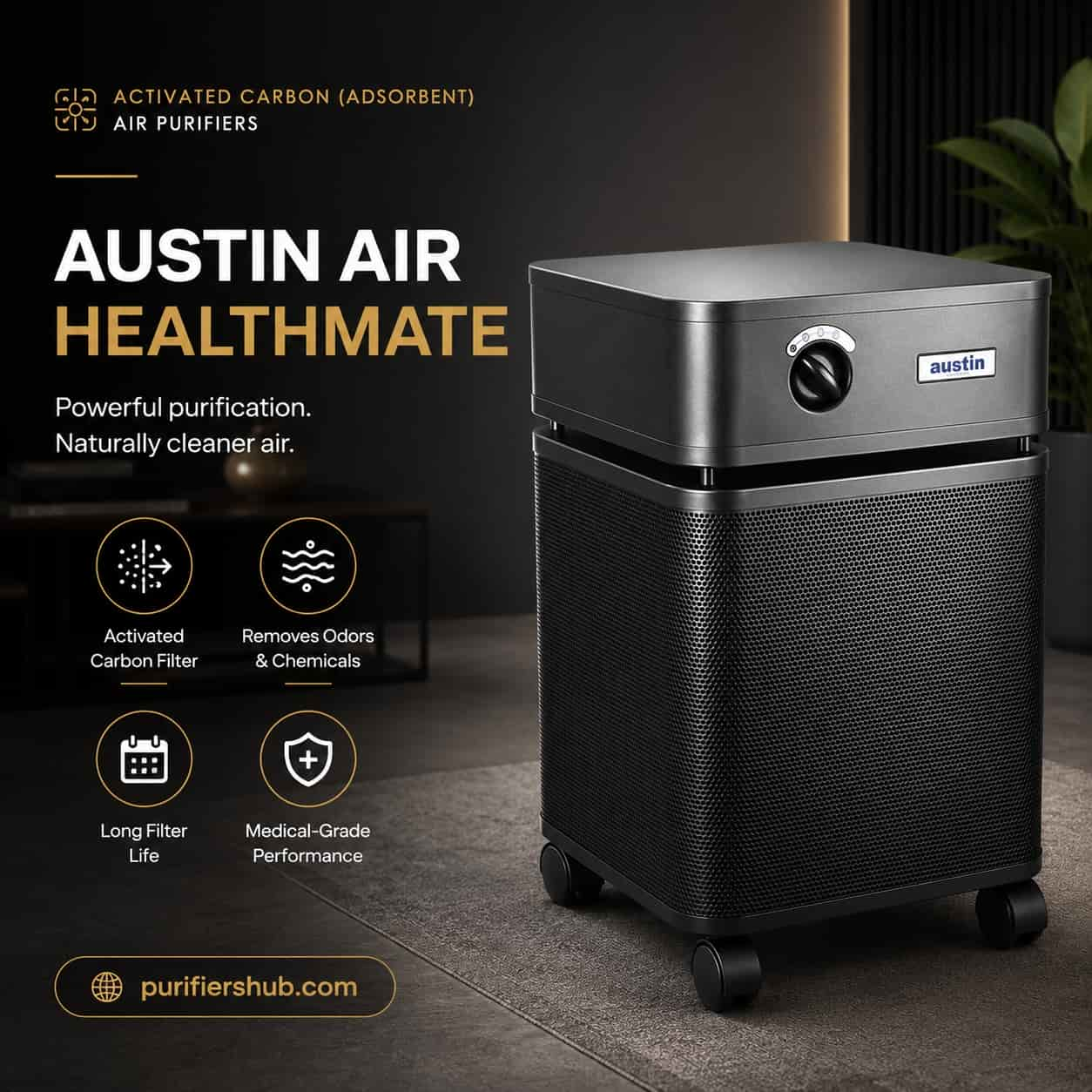
Austin Air HealthMate
About Carbon Filter Air Purifier: Discover the Best Options for 2026
Carbon filter air purifiers are designed to help reduce certain odors, gases, and volatile organic compounds (VOCs) from indoor air using activated carbon filtration. Unlike particle-focused filters, activated carbon works by adsorbing gaseous pollutants onto its surface, making it useful for homes where odors, smoke, or chemical smells are a concern. An air purifier with carbon filter may combine this technology with HEPA or other particle filtration for broader air cleaning. When comparing an activated carbon air purifier, consider the amount of carbon, filter design, airflow, and replacement requirements, as these factors can affect real-world performance.
Frequently Asked Questions
What is a carbon filter air purifier?
A carbon filter air purifier uses activated carbon or another sorbent material to adsorb certain gases and odor-causing compounds as air passes through the filter. These filters are commonly used alongside particle filtration, such as HEPA, because carbon targets gaseous pollutants while mechanical filters target particles.
What does a carbon filter air purifier help remove?
Activated carbon filtration is mainly intended for certain gases, VOCs, and odors. Performance varies by the type of carbon, the amount of filter media, airflow, and the specific pollutant. A thicker or larger quantity of carbon generally provides more adsorption capacity than a thin carbon-coated filter.
Is activated carbon better than a HEPA filter for odors?
They serve different purposes rather than one being universally better. HEPA filtration is designed primarily for airborne particles, while activated carbon is used to adsorb certain gases and odor compounds. For broader filtration, some air purifiers combine both technologies in the same unit.
How much activated carbon should an air purifier have?
There is no single amount that guarantees effective gas or odor removal. EPA guidance indicates that a larger amount of activated carbon can improve effectiveness, while thin layers may have limited capacity and can become saturated more quickly. When comparing models, look beyond the words "carbon filter" and check the amount and type of sorbent material when the manufacturer provides that information.
How often should a carbon filter be replaced?
Replacement timing depends on the filter design, pollutant levels, operating conditions, and manufacturer guidance. Activated carbon has a finite adsorption capacity, so it can become less effective as it loads with pollutants. Check the manufacturer's recommended replacement schedule and consider replacing sooner if the filter becomes overloaded or develops persistent odors.