Airocide APS-200 PM2.5
Hover to zoom ยท Click to enlarge

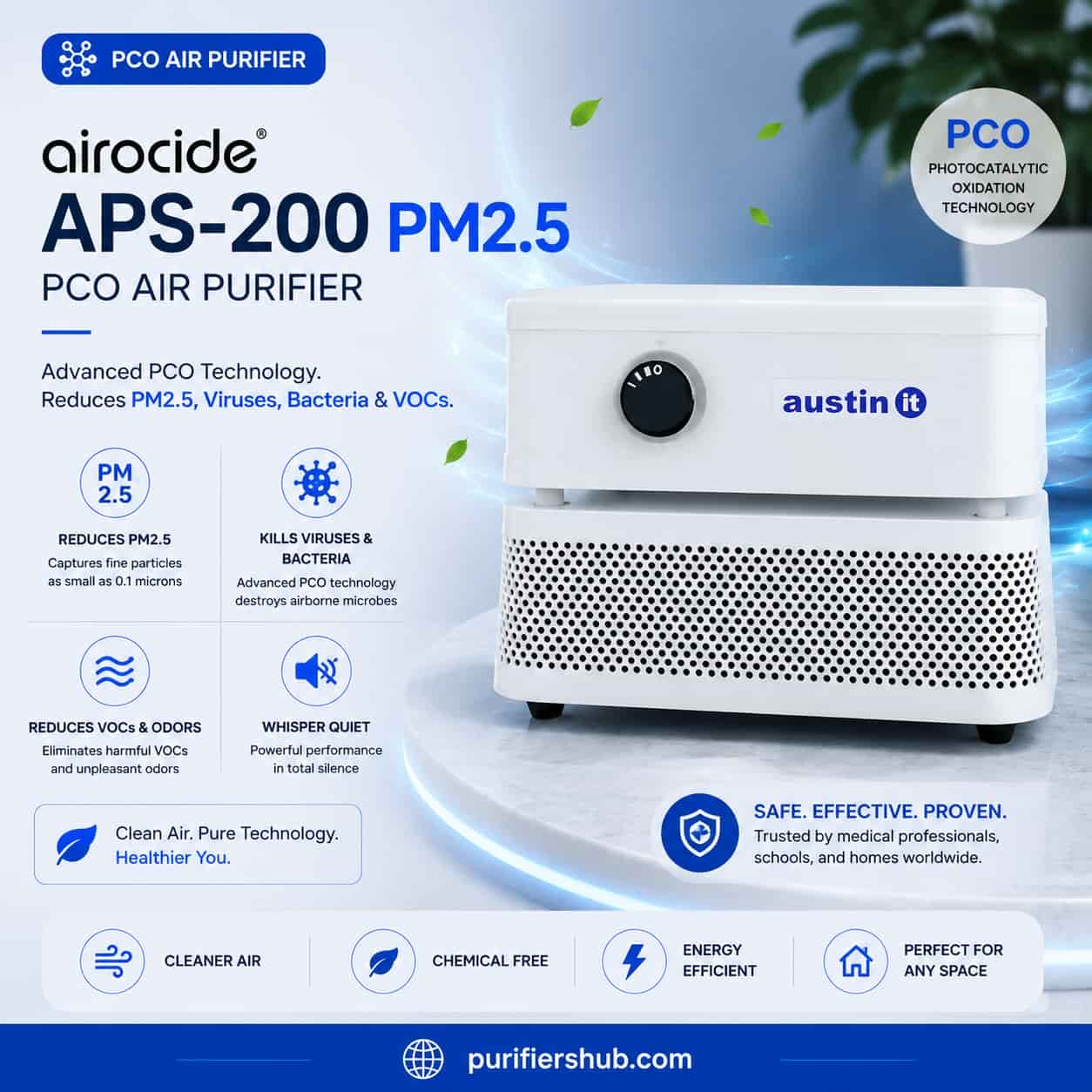
Airocide APS-200 PM2.5

Discover the Airocide Air Purifier APS-200, including its innovative technology, key features, performance, and price to see if it's worth it.

Coverage
Not explicitly published as a standalone sq ft/room-size figure in available sources - Airocide's marketing emphasizes continuous molecular-level treatment rather than a CADR/room-size rating like conventional purifiers
HEPA Grade
Not Applicable - this is a TRULY FILTERLESS device; no HEPA filter of any grade is used
Noise
Not explicitly published in available sources for this search pass
Power
Not explicitly published in available sources for this search pass
Warranty
2-Year Warranty
App Control
No
$980โ€”$1,050

Key Features

TRULY FILTERLESS design - uses NASA-developed PCO (Photocatalytic Oxidation) catalyst chamber with TiO2-coated hollow glass tubes + UV light + a Carbon/Permanganate blend and Hospital Grade MERV media (for the PM2.5 upgrade specifically) + enhanced NASA PCO CatalystFDA-approved Class II medical deviceCARB certified (zero ozone)Edison Award winner for designfloor stand and wall mount options available

Expert Analysis

Full Review

The Airocide APS-200 PM2.5 is a residential air purifier designed to address fine particulate matter along with airborne pollutants such as VOCs, odors, mold, bacteria, and viruses. It combines a PM2.5 filtration stage with Airocide's NASA-developed photocatalytic oxidation (PCO) technology, which uses UV-activated catalysts to break down carbon-based pollutants rather than simply trapping them. The APS-200 PM2.5 is positioned for smaller spaces such as bedrooms and home offices, while its specialized cartridge is replaced approximately once a year under typical conditions. Airocide also states that its PCO system produces no ozone.

Quick Verdict

Pros & Cons

Pros5 points
  • FDA-approved Class II medical device status and CARB certification (zero ozone) โ€” genuine regulatory credentials rather than marketing language
  • Truly filterless PCO design means no HEPA filter to replace โ€” only an annual catalyst/cartridge refresh
  • NASA-derived core technology with a documented development history
  • Edison Award recognition for design
  • Designed for continuous 24/7 operation without needing regular filter changes
Cons4 points
  • Premium price (~$700-800) for a device with no published CADR or standard room-size (sq ft) rating, making direct performance comparison to HEPA purifiers difficult
  • Key specs โ€” weight, dimensions, noise level, power consumption โ€” are not clearly published by Airocide, which is a real transparency gap for a device at this price point
  • No Wi-Fi/app control, no PM sensor or Auto Mode โ€” it runs continuously at a fixed treatment level with no real-time feedback
  • Because it's filterless, it also captures no particulates the way a mechanical HEPA filter physically traps and holds them โ€” buyers relying specifically on visible dust/hair capture should understand this is a fundamentally different mechanism
5 pros56% positive overall4 cons

Technical Data

Full Specifications

SpecificationValue
Model NumberAPS-200 PM 2.5
VoltageNot explicitly published in available sources for this search pass
AC/DCAC (Mains Powered, standard plug-in unit)
WeightNot explicitly published in available sources for this search pass
HeightNot explicitly published in available sources for this search pass
WidthNot explicitly published in available sources for this search pass
Warranty2-Year Warranty
App/Mobile ControlโŒ No
TimerNot explicitly published/confirmed - device is designed for continuous 24/7 operation rather than timed sessions
Display TypeNot explicitly detailed in available sources (device is designed to be minimalist/always-on)
Fan Speeds0
Room CoverageNot explicitly published as a standalone sq ft/room-size figure in available sources - Airocide's marketing emphasizes continuous molecular-level treatment rather than a CADR/room-size rating like conventional purifiers
HEPA GradeNot Applicable - this is a TRULY FILTERLESS device; no HEPA filter of any grade is used
Filter TypeFilterless PCO (Photocatalytic Oxidation): NASA-developed TiO2 catalyst-coated hollow glass tubes + UV light, PLUS (for the PM2.5 variant specifically) an added Carbon/Permanganate blend and Hospital Grade MERV media to address particulate matter that base PCO alone cannot capture
Air Changes/HourNot Applicable in the traditional HEPA-ACH sense - Airocide does not publish a conventional ACH figure; the PCO cartridge is replaced annually rather than being ACH-rated
Noise LevelNot explicitly published in available sources for this search pass
Energy ConsumptionNot explicitly published in available sources for this search pass
Annual Running CostNot calculable without a confirmed wattage figure
Auto ModeโŒ No
Best ForVOCs, mold spores, bacteria, viruses, PM2.5/PM10 particulate matter, dust, dander, odors, cancer-causing particulate matter - marketed for immunocompromised/medical-sensitive users given its FDA clearance
FeaturesTRULY FILTERLESS design - uses NASA-developed PCO (Photocatalytic Oxidation) catalyst chamber with TiO2-coated hollow glass tubes + UV light + a Carbon/Permanganate blend and Hospital Grade MERV media (for the PM2.5 upgrade specifically) + enhanced NASA PCO Catalyst, FDA-approved Class II medical device, CARB certified (zero ozone), Edison Award winner for design, floor stand and wall mount options available

Common Questions

Frequently Asked Questions

What is the Airocide air purifier APS-200 designed for?
The Airocide APS-200 PM2.5 is designed to help reduce airborne particles and certain pollutants in indoor environments. Its technology and performance should be evaluated according to the manufacturer's specifications and intended room size.
How does the Airocide air purifier APS-200 PM2.5 work?
The APS-200 PM2.5 uses Airocide's air-cleaning technology to treat airborne pollutants as air passes through the unit. It is designed specifically for environments where monitoring and reducing fine particulate matter is important.
What is the Airocide APS-200 PM2.5 price?
The APS-200 PM2.5 has typically been priced around $980โ€”$1,050, although actual prices can vary by retailer, availability, promotions, and region.
Is the Airocide APS-200 suitable for reducing PM2.5?
Yes, the APS-200 PM2.5 is specifically designed with fine particulate matter in mind. Its suitability depends on factors such as room size, operating conditions, airflow, and the level of particulate pollution.
How often does the Airocide APS-200 need maintenance?
Maintenance requirements depend on usage and the manufacturer's recommended service schedule. Users should follow the official maintenance instructions and replace or service components when indicated to maintain the unit's intended performance.

User Reviews

Loading reviewsโ€ฆ

You May Also Like

Related Products

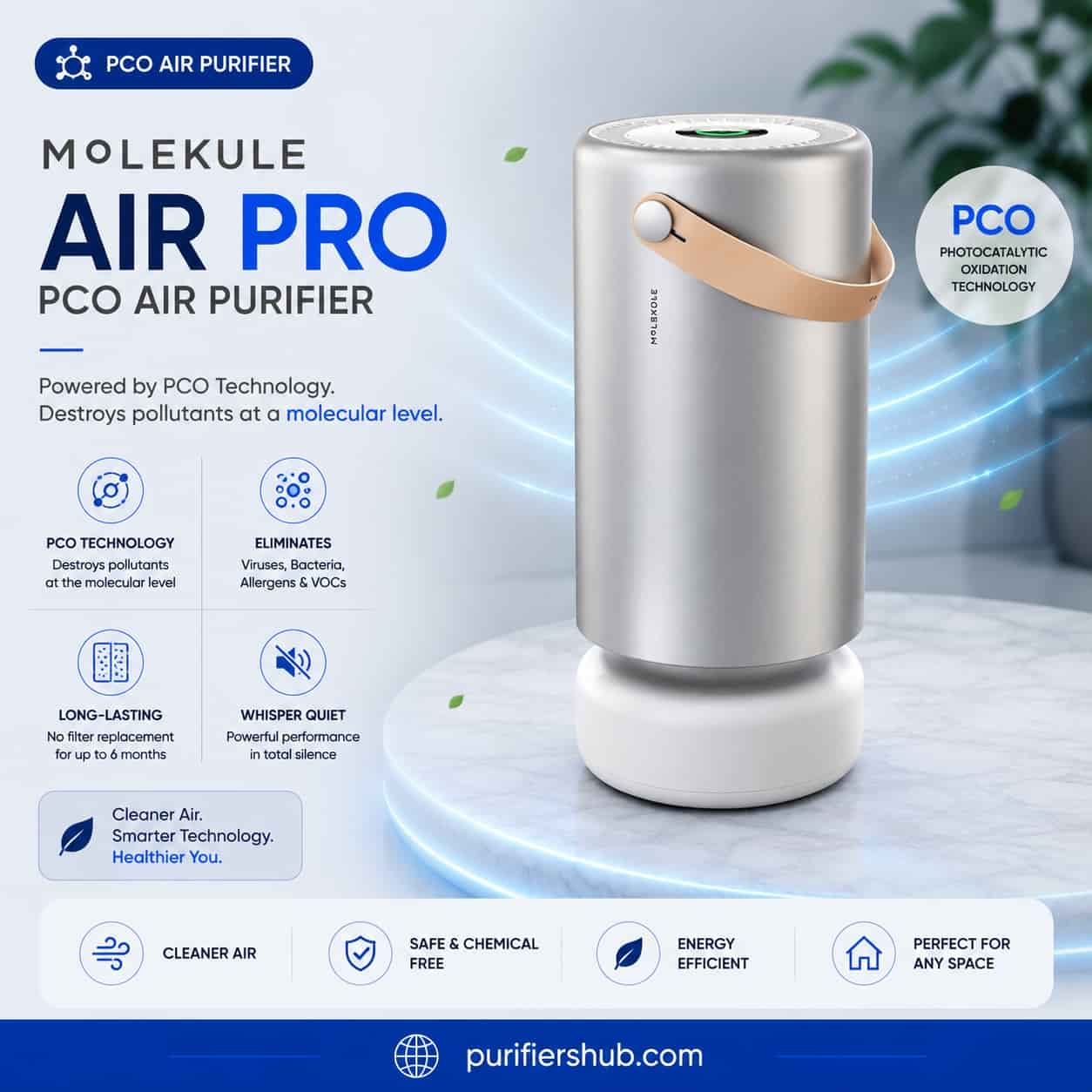
Molekule Air Pro
Best for Large residential/business spaces
pcosmart

Molekule Air Pro

$980โ€”$1,015
Large residential/business spaceshigh-traffic areasprofessional/clinical settings requiring FDA-cleared virus/bacteria destruction
Up to 1,000 ft2 (93 m2) with ceiling heights up to 8ft
Includes True HEPA layer within its Tri-Power filter (99.97% capture rate) - but this is PECO-PRIMARY technology, not a HEPA-first design; independent reviewer notes CADR/particulate performance is 'lower' than dedicated HEPA competitors at similar price points
Not explicitly published as an exact dB figure for Air Pro specifically in this search pass (Air Mini+ range of 39-62dB found, should not be assumed identical for the larger Air Pro)
Not explicitly published for Air Pro specifically in this search pass (related original 'Molekule Air' model uses ~80W motor per AirPurifierFirst.com's independent teardown - NOT confirmed as identical spec for the newer Air Pro)
View Full Review
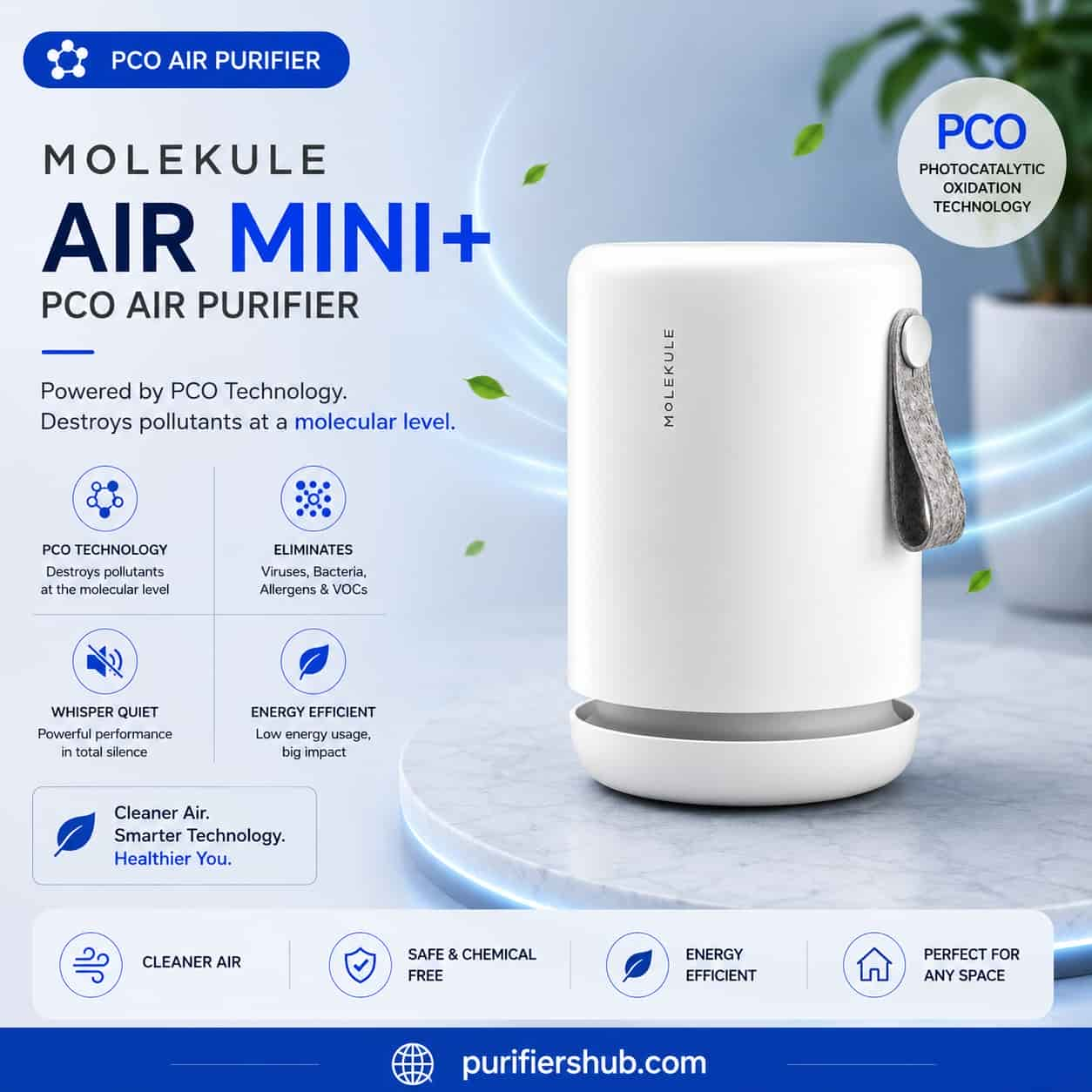
Molekule Air Mini+
Best for Small spaces - studio apartments
pcosmart

Molekule Air Mini+

$340โ€”$360
Small spaces - studio apartmentskids' bedroomshome offices
Up to 250 ft2 (23.22 m2) with avg. 8-ft ceilings
Includes True HEPA layer within its Tri-Power filter, but this is PECO-primary technology, not HEPA-first design
39-62 dB(A) (Lowest speed: 39dBa; Highest speed: 62dBa)
20-55 W (Lowest speed: 20W; Highest speed: 55W)
View Full Review
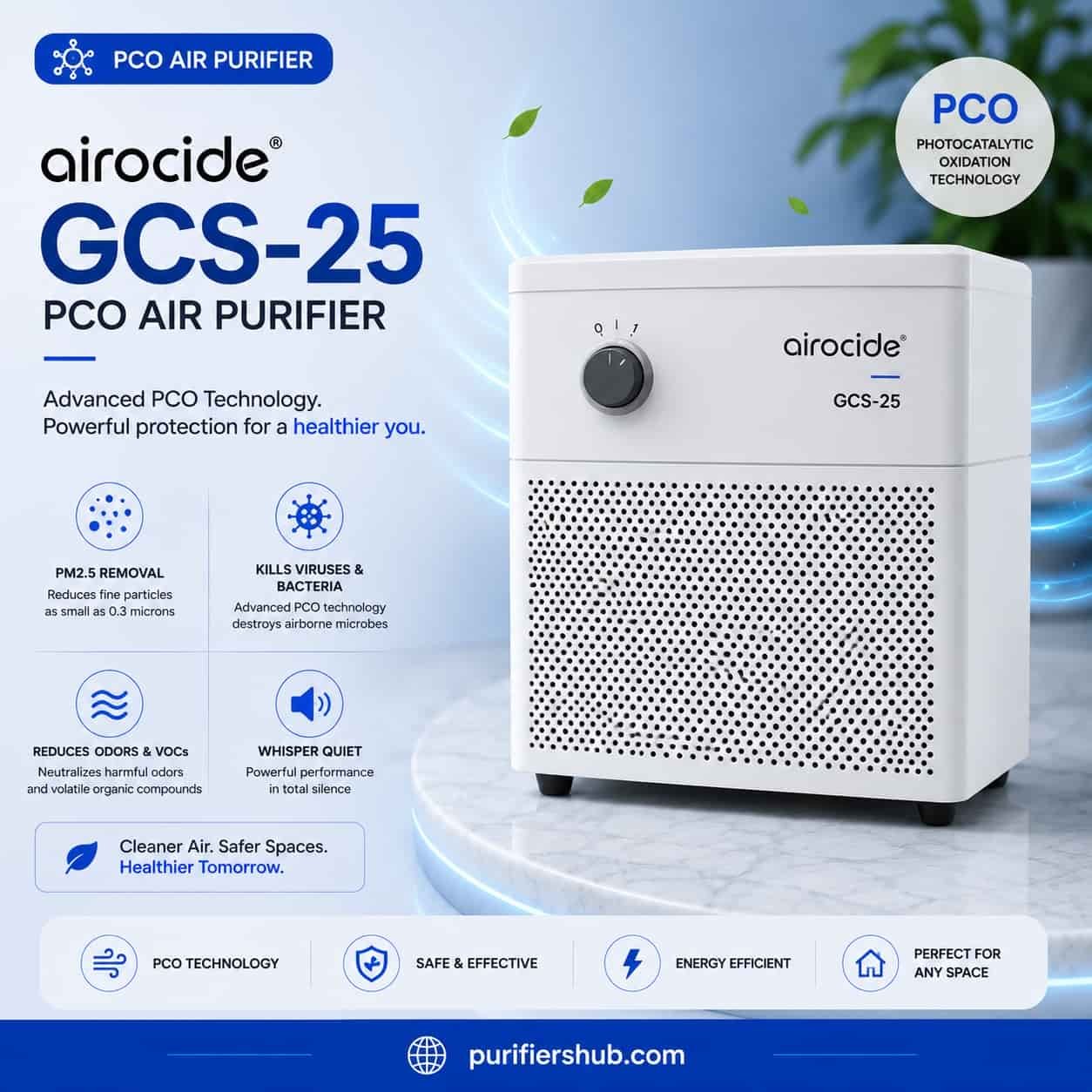
Airocide GCS-25
Best for Large open spaces - basements
pcolarge room

Airocide GCS-25

$2,500โ€”$4,200
Large open spaces - basementsbonus roomsliving rooms
Rated for approximately 2,000 cubic feet (57 cubic meters) of space per treatment claim (note: this is a cubic-footage/volume rating, not the square-footage rating typically used by conventional purifiers - not directly comparable without knowing ceiling height)
Not Applicable - has a dedicated Pre-Filter for particulates, but no HEPA filter of any grade; primary purification is via NASA PCO technology, not HEPA
Not explicitly published in available sources for this search pass
View Full Review
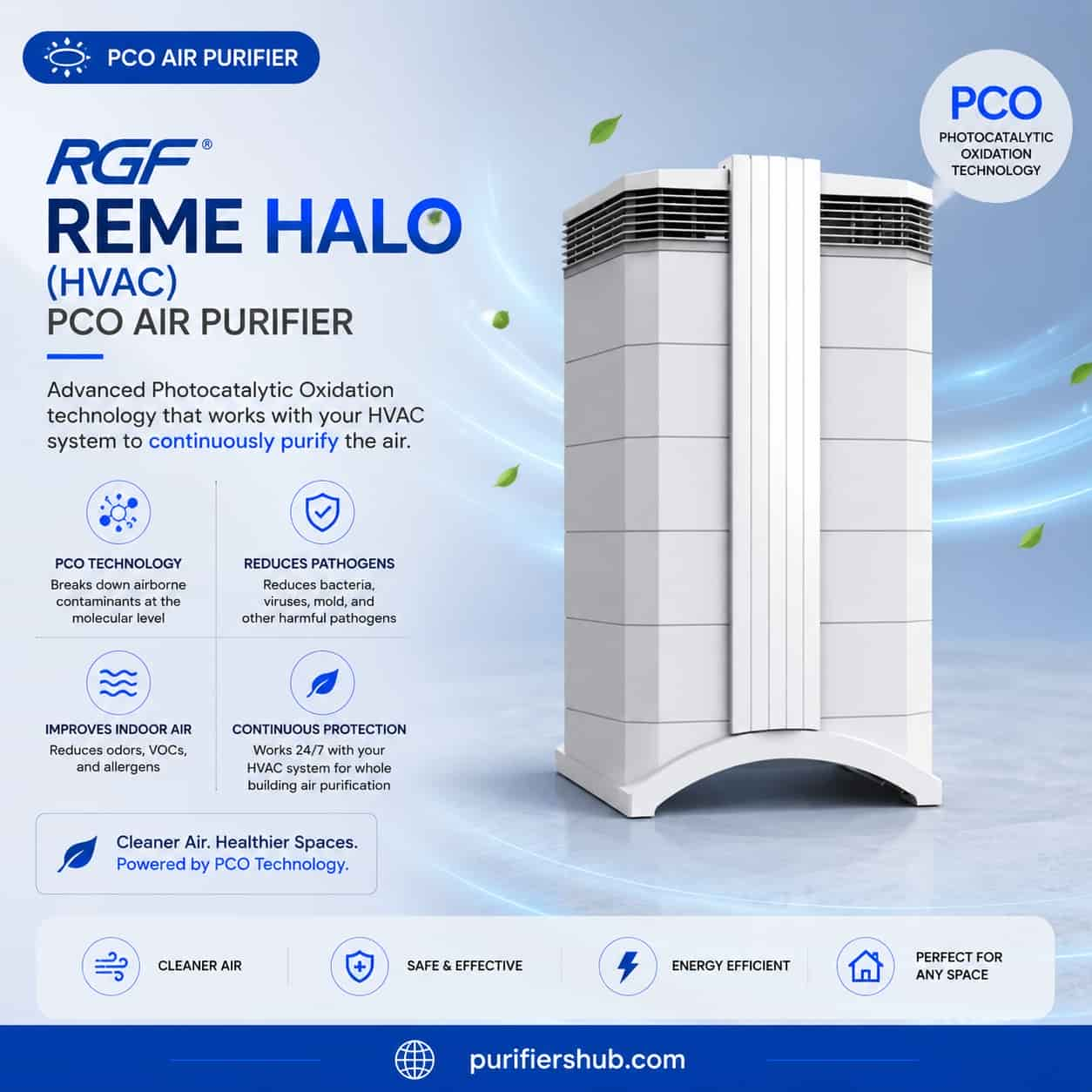
RGF REME HALO (HVAC)
Best for Whole-home/whole-building continuous air treatment via existing HVAC ductwork - particulates (pollen
pcolarge room

RGF REME HALO (HVAC)

$339โ€”$499 USD
Whole-home/whole-building continuous air treatment via existing HVAC ductwork - particulates (pollenmold sporesdander
Rated for 1,000-6,500 CFM airflow / 2.5-16.25 ton HVAC systems (compatible with the vast majority of residential and light-commercial central air systems - NOT a standalone square-footage rating like portable purifiers, since coverage = whatever the connected HVAC system serves)
Not Applicable - this device has NO HEPA filter of any kind; it works entirely via Advanced Oxidation Process (ionized hydro-peroxides, superoxide ions, hydroxide ions) distributed through the existing HVAC ductwork, not mechanical particulate filtration
Not explicitly published as a standalone dB figure in available sources - unit itself is silent (RGF's own materials note it 'operates silently'); any noise would come from the host HVAC blower, not this device
17 W
View Full Review